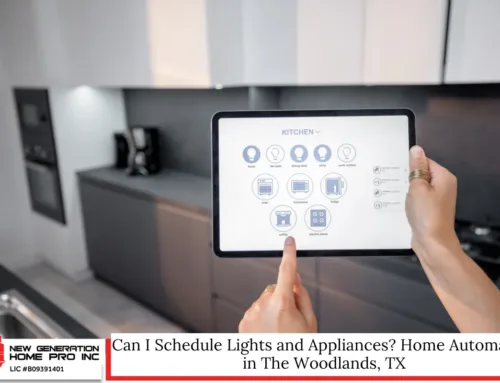
A Practical Question for Smart Homes in Montgomery County
Home Automation in The Woodlands, TX is no longer a futuristic idea—it’s part of everyday living for homeowners who want better comfort, energy efficiency, and control. The problem many people discover after installation is simple but frustrating: what happens when the internet goes down? Storms, outages, router failures, or service interruptions can all disrupt connectivity. That raises concern, especially when climate control is essential during hot Texas summers. The anxiety grows when homeowners fear losing control over their heating and cooling system. The solution is understanding how smart thermostats are designed to function both online and offline, what features depend on connectivity, and how a properly designed home automation system can continue to work reliably even without internet access.
Why Smart Thermostats Are Central to Modern Smart Homes
Smart thermostats have become one of the most widely adopted smart home devices, and for good reason. They offer precise temperature control, learning capabilities, scheduling, and energy usage insights that traditional thermostats simply cannot match.
In a connected home automation system, the thermostat often acts as the command center for comfort. It communicates with HVAC equipment, sensors, and sometimes other smart home devices such as blinds, ceiling fans, and occupancy detectors. When internet access is available, homeowners can control settings remotely through mobile apps or voice assistants. However, the core function of regulating temperature does not always require constant connectivity.
Understanding this distinction is essential for homeowners planning or upgrading a smart home in The Woodlands.
The Short Answer: Offline Functionality Is Limited but Real
Yes, many smart thermostats can still work without internet, but with limitations. When offline, most devices revert to local control mode. This means:
- Temperature adjustments can usually be made directly on the thermostat
- Pre-programmed schedules often continue to run
- HVAC systems still respond to heating and cooling demands
What is lost is remote access, cloud-based learning, weather-based optimization, and integration with other smart home platforms that rely on internet communication.
The degree of offline capability varies by manufacturer and model, which is why system design matters as much as the device itself.
How Smart Thermostats Communicate Without Internet
Local Control Through Internal Hardware
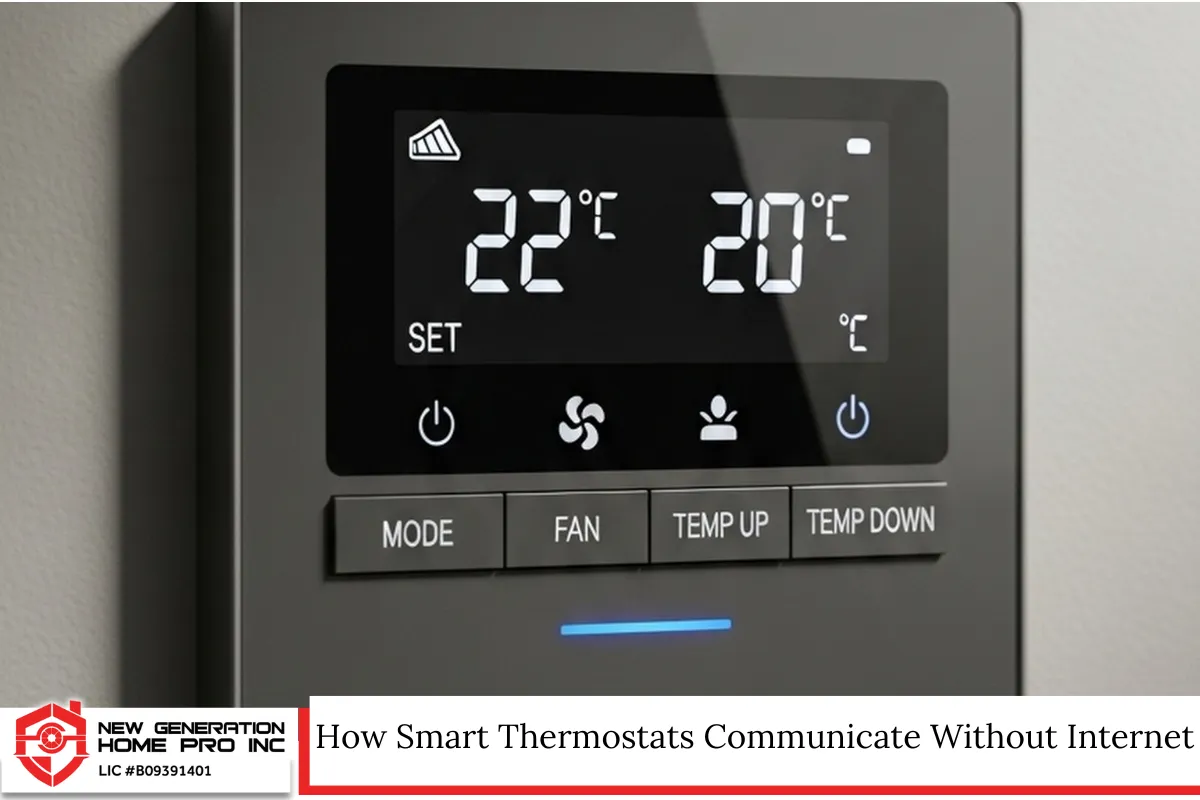
At their core, smart thermostats are still thermostats. They use onboard sensors to read indoor temperature and activate HVAC equipment through low-voltage wiring. This direct communication happens locally, not through the internet.
As long as the thermostat has power and the HVAC system is operational, basic climate control remains functional. Touchscreens, physical buttons, or dials usually still work during an outage.
Local Scheduling and Memory
Most smart thermostats store schedules internally. That means if you programmed weekday and weekend temperature changes in advance, those settings continue to operate even when Wi-Fi is unavailable.
This local memory ensures that homeowners in The Woodlands do not lose climate consistency during brief or extended outages.
Features That Require Internet Access
While basic heating and cooling still function, advanced features depend heavily on connectivity.
Remote Access and Mobile Apps
Without internet, you cannot control your thermostat from a smartphone, tablet, or computer. Any changes must be made directly at the device.
Learning Algorithms and AI Adjustments
Many smart home platforms rely on cloud-based processing to analyze behavior patterns. When offline, these learning features pause and resume once the connection is restored.
Weather-Based Adjustments
Smart thermostats often use real-time weather data to optimize performance. Without internet, the system cannot access forecasts, which limits adaptive temperature control during extreme heat or cold.
Integration With Other Smart Home Devices
Voice assistants, automation routines, and cross-device triggers typically require internet access. For example, telling a smart speaker to adjust the temperature will not work during an outage.
The Role of the Home Automation System as a Whole
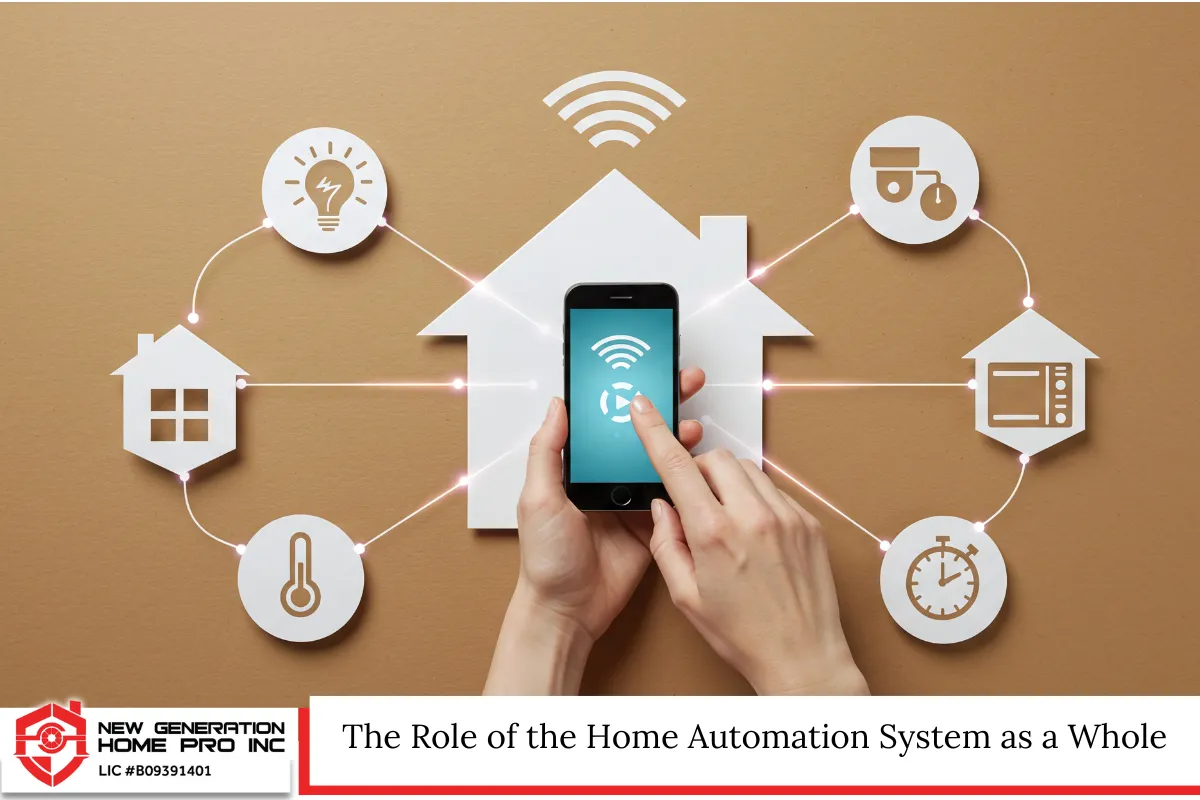
A thermostat does not exist in isolation. In a professionally designed home automation system, redundancy and local control are built into the architecture.
Local Hubs and Controllers
Some smart home setups use local hubs that allow devices to communicate with each other even when the internet is down. This means automation routines such as temperature changes based on occupancy sensors may still function.
Hardwired vs Wireless Components
Hardwired connections tend to be more reliable during outages than cloud-dependent wireless systems. This is particularly relevant in larger homes common throughout The Woodlands.
Power Considerations
Internet outages often coincide with power disruptions. Backup power solutions, such as battery systems or generators, can keep both thermostats and HVAC equipment operational.
Read What is the Most Expensive Home Automation in The Woodlands, TX
Texas Climate Makes Offline Reliability Important
The climate in The Woodlands places unique demands on heating and cooling systems. Extended heat, high humidity, and sudden weather changes mean that temperature control is not a luxury—it’s a necessity.
A smart thermostat that maintains core functionality without internet provides peace of mind. Even during storms or infrastructure disruptions, homeowners can rely on their HVAC system to protect indoor comfort and prevent issues like humidity buildup or excessive heat.
Compliance With Local and State Regulations
Texas does not prohibit the use of smart home or automation technologies, but installations must comply with established electrical and building codes. In Montgomery County and The Woodlands area, residential systems typically follow:
- National Electrical Code (NEC) standards
- Local permitting requirements for HVAC and low-voltage work
- Manufacturer installation guidelines
Professional installation helps ensure that thermostats and connected devices are properly wired, grounded, and integrated with existing HVAC systems.
Security and Privacy When Internet Goes Down
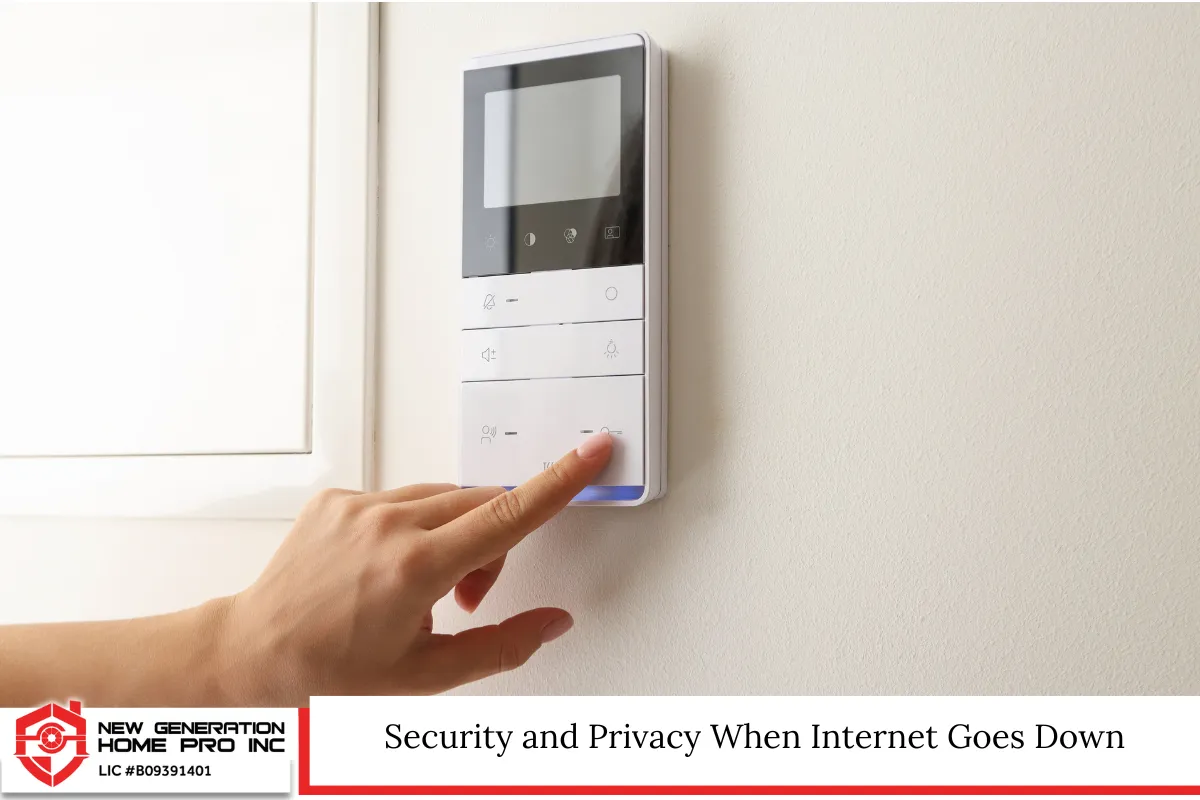
A common misconception is that smart devices become insecure during outages. In reality, offline operation often reduces exposure to external threats because devices are not communicating with external servers.
However, once connectivity is restored, systems should automatically re-establish secure connections. Proper configuration, firmware updates, and strong network security remain important for long-term reliability.
Choosing the Right Smart Thermostat for Offline Use
Not all smart thermostats are created equal. When offline reliability matters, homeowners should look for:
- Full local control without app dependency
- Internal scheduling memory
- Compatibility with local automation hubs
- Clear manual override options
These features ensure that the smart home remains functional even when internet access is unavailable.
What This Means for Smart Homes in The Woodlands
A smart thermostat does not become useless without internet. It simply shifts into a more traditional operating mode. With the right planning, homeowners can enjoy the benefits of smart home technology without being overly dependent on constant connectivity.
For homes in The Woodlands, this balance between automation and reliability is especially important due to climate demands and occasional service disruptions.
Home Automation in The Woodlands, TX – New Generation Home Pro Inc
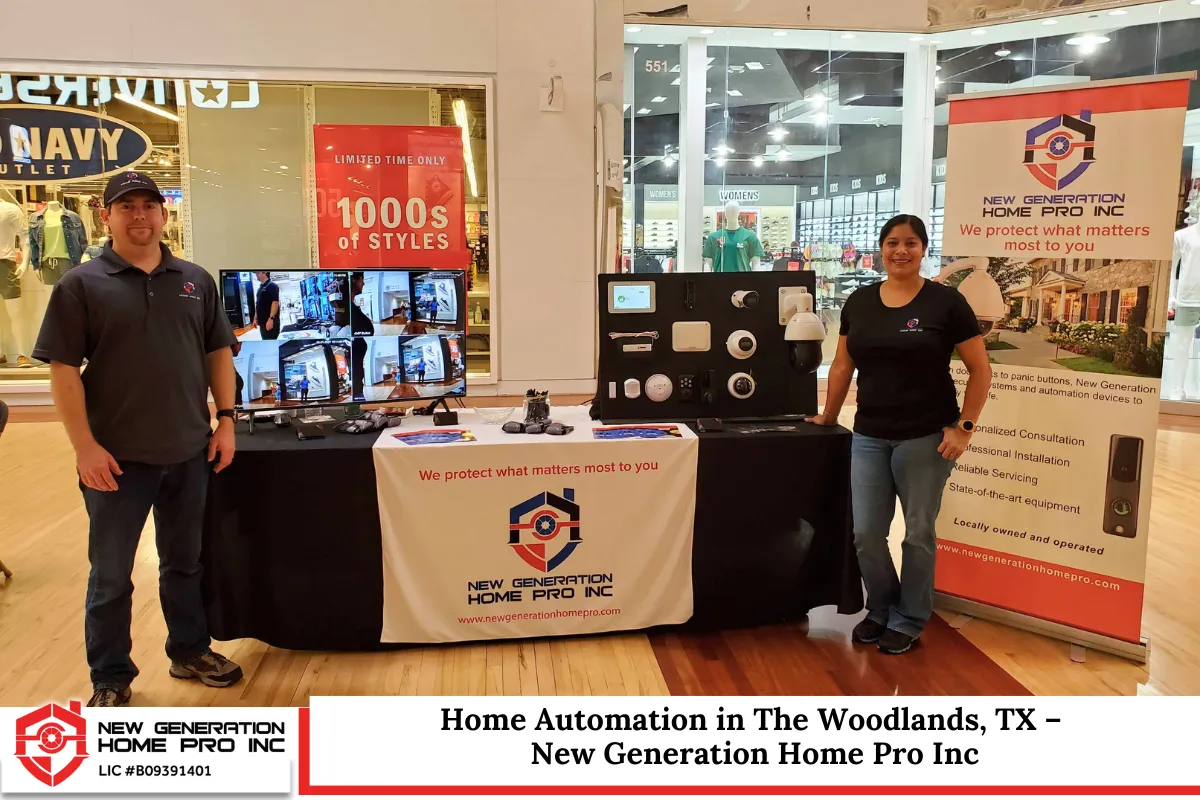
New Generation Home Pro Inc helps homeowners take full control of their living spaces through professionally designed home automation solutions. Based in The Woodlands, Texas, our company focuses on systems that are reliable, practical, and built to perform even when internet connectivity is limited. Whether you’re upgrading a smart thermostat or planning a complete home automation system, expert guidance ensures everything works together seamlessly. From initial consultation to installation and ongoing support, New Generation Home Pro Inc helps homeowners create smarter, more comfortable homes without unnecessary complexity. Call (713) 501-9985, visit our office in The Woodlands, or fill out the contact form to explore smarter solutions designed around your home.
Frequently Asked Questions
Can a smart thermostat damage my HVAC system if the internet goes out?
No, a smart thermostat will not damage your HVAC system simply because the internet goes out. The thermostat continues to communicate directly with the HVAC equipment through physical wiring. It operates much like a traditional thermostat in offline mode, maintaining temperature setpoints and cycling equipment as needed. Problems usually arise from improper installation, incorrect wiring, or incompatible systems—not from loss of connectivity. Ensuring professional installation and correct configuration protects both the thermostat and HVAC system.
Will energy savings disappear without internet access?
Energy savings may be reduced but not eliminated. Without internet, advanced optimization features such as learning algorithms and weather-based adjustments pause. However, scheduled temperature changes and manual efficiency settings still function. Homeowners who program reasonable temperature schedules continue to see savings compared to manual thermostats. Once the internet connection returns, cloud-based energy optimization resumes automatically without requiring reconfiguration.
Do smart thermostats need Wi-Fi or Ethernet to function offline?
Smart thermostats do not require Wi-Fi or Ethernet to function offline for basic operations. These connections are used primarily for remote access, updates, and cloud-based features. As long as the thermostat has power and proper wiring to the HVAC system, it can control heating and cooling locally. Some models also include Bluetooth or local network communication for limited control without full internet access.
Can offline smart thermostats still work with zoning systems?
Yes, many zoning systems continue to operate offline because zone controllers communicate locally with thermostats and dampers. The system follows pre-programmed rules and temperature settings stored in local memory. However, remote monitoring and advanced automation features tied to cloud services may be temporarily unavailable. Proper system design ensures zoning remains effective during outages.
Is it worth installing a smart thermostat if my internet is unreliable?
Yes, it can still be worth installing a smart thermostat even with unreliable internet. The core benefits—precise temperature control, scheduling, and energy efficiency—remain available offline. The key is choosing a thermostat and home automation system designed with local control in mind. This approach delivers both modern convenience and dependable operation regardless of connectivity issues.
Disclaimer: This article is for general informational purposes only and does not constitute legal, electrical, or HVAC advice. Local codes, regulations, and system requirements may vary. Always consult qualified professionals for installation and compliance in The Woodlands, Texas.
Read The Woodlands Security Camera Installer: How Long Does It Take to Install Security Cameras?