How a Home Security System Stops Hidden Leaks Before They Ruin Your Home
A home security system does more than guard your doors and windows; it can also catch the silent threats lurking behind walls and under appliances. Flood sensors are often used to provide early warnings of leaks or flooding before minor drips become major disasters. Picture this: a water heater supply line fails on a Tuesday afternoon while your family is out. By the time you walk through the door, warped flooring, soaked drywall, and the first stages of mold have already taken hold. Repair bills can climb past $12,500 on average for a single water damage claim. Flood sensors solve this problem by detecting water on the floor and pushing alerts through your security setup before the damage spreads. Below, you will learn what these sensors are, how they work, the best locations inside a typical Conroe house, and how to connect them with cameras, alarms, and smart home automation.
Key Takeaways
- Flood sensors detect water leaks early and can be tied into a modern home security system in Conroe, TX for layered protection.
- These devices help prevent expensive water damage by sending instant alerts to your phone and to a monitoring center.
- Ideal installation spots include water heaters, washing machines, kitchens, bathrooms, and low-lying areas of the home.
- Pairing flood sensors with a security camera system and automated shut-off valves delivers strong, multi-layered defense.
- Local, professional installation in Conroe, Texas helps ensure proper placement, reliable connectivity, and ongoing support.
What Is a Flood Sensor and How Does It Work?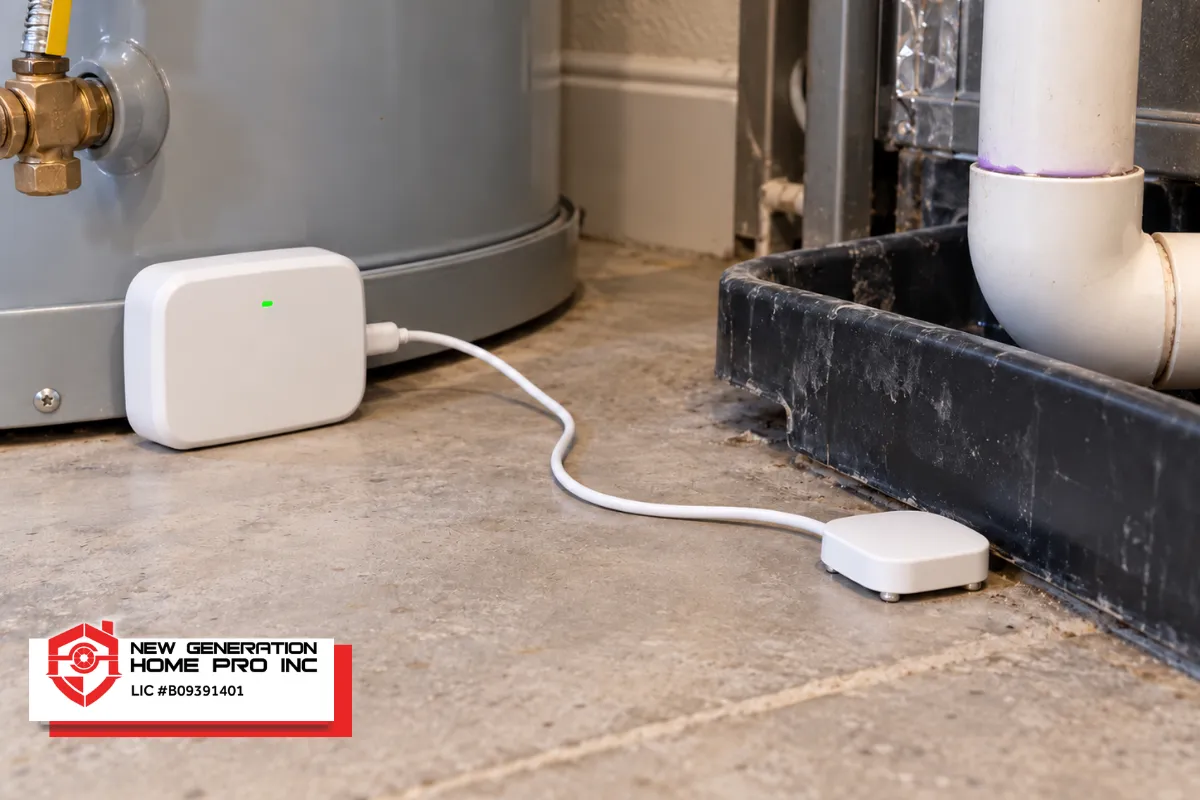
A flood sensor, sometimes called a water leak detector, is a compact device that senses unintended water contact in areas where moisture should not accumulate. It then triggers alerts within your home security ecosystem. Alarm systems tied to these sensors can also include police, medical, and fire monitoring through the same panel.
Core components of a typical unit:
- Two or more conductive metal probes on the bottom of the device
- Built-in electronics that interpret changes in the circuit when water bridges the probes
- A power source, usually a long-life lithium battery
- Wireless communication (Z-Wave, Zigbee, Wi-Fi, or proprietary RF) to a hub or alarm panel
Flood sensors detect water presence using conductive probes. When liquid touches those probes, it completes a circuit or changes resistance, and the sensor registers a leak condition. Flood sensors can provide alerts via smartphone notifications or local alarms, depending on how your system is configured. They send alerts to smartphones when leaks are detected, giving you time to respond even if you are across town. Most models are low-profile, battery-powered, and sit flat on a floor or inside a drip pan without any drilling or major construction work.
Where to Install Flood Sensors in a Conroe, TX Home
Strategic placement matters more than the total number of devices. A single sensor in the right spot catches a problem faster than five sensors in low-risk corners. Installing flood sensors in high-risk areas helps mitigate water damage across your property.
High-priority locations in a typical single-family house:
- Around water heaters and washing machines
- Under refrigerators with ice makers
- Near dishwashers, kitchen sinks, and bathroom toilets
- Inside HVAC condensate drain pans
- Utility rooms and closets that back up to wet walls
Conroe, TX, is prone to heavy rainfall and tropical storms that elevate flood risks, and many homes here sit on slab foundations with no basements to absorb overflow. Garages and ground-level rooms near exterior walls can be vulnerable during heavy rain, even outside mapped floodplains. Clay soil drains poorly, which compounds the risk.
A professional walkthrough from a technician familiar with Conroe construction styles and plumbing layouts can reveal hidden problem areas, such as older supply lines tucked behind cabinetry, and help you maximize coverage with fewer devices.
Connecting Flood Sensors to Your Home Security and Smart Devices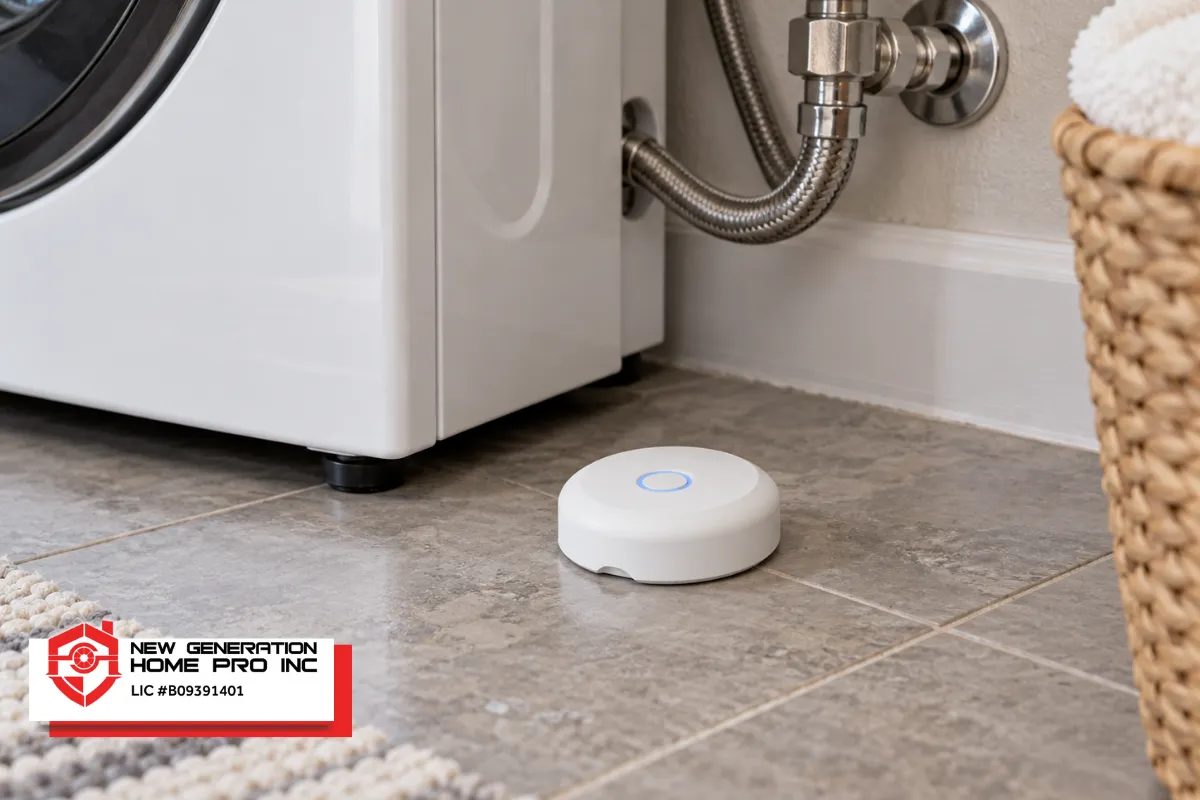
Modern security systems allow flood sensors, door contacts, motion detectors, and a security camera system to work together through a single control panel or smart hub. Flood sensors can be integrated into home security systems for automated responses, making your equipment more than a collection of standalone gadgets.
Each sensor communicates wirelessly to the main alarm panel using protocols like Z-Wave, Zigbee, or Wi-Fi, depending on the platform. The panel relays alerts to a mobile app, giving you remote notifications, event history, and real-time status checks while you are away from the house. Smart systems allow remote arming and disarming from anywhere, so you can manage your entire setup from your phone.
Smart leak sensors can integrate into home automation systems, enabling useful rules: turning on lights near the leak for visibility, pausing a connected washing machine, or triggering a compatible smart water shut-off valve. They can trigger alarms or shutoff valves automatically, stopping water flow within seconds. Smart home systems can integrate with Google, Alexa, and HomeKit, which means your flood sensors fit into the broader ecosystem you may already use day to day.
Before adding sensors to an existing system, confirm compatibility with your panel. Have each device professionally enrolled, tested, and labeled with clear zone names like “Laundry Room Leak Sensor” or “Water Heater Sensor” so your monitoring company knows exactly where to direct a response.
Read Do I Need Carbon Monoxide Detectors in My Home Security System in Conroe, TX?
Benefits of Adding Flood Sensors to Your Security System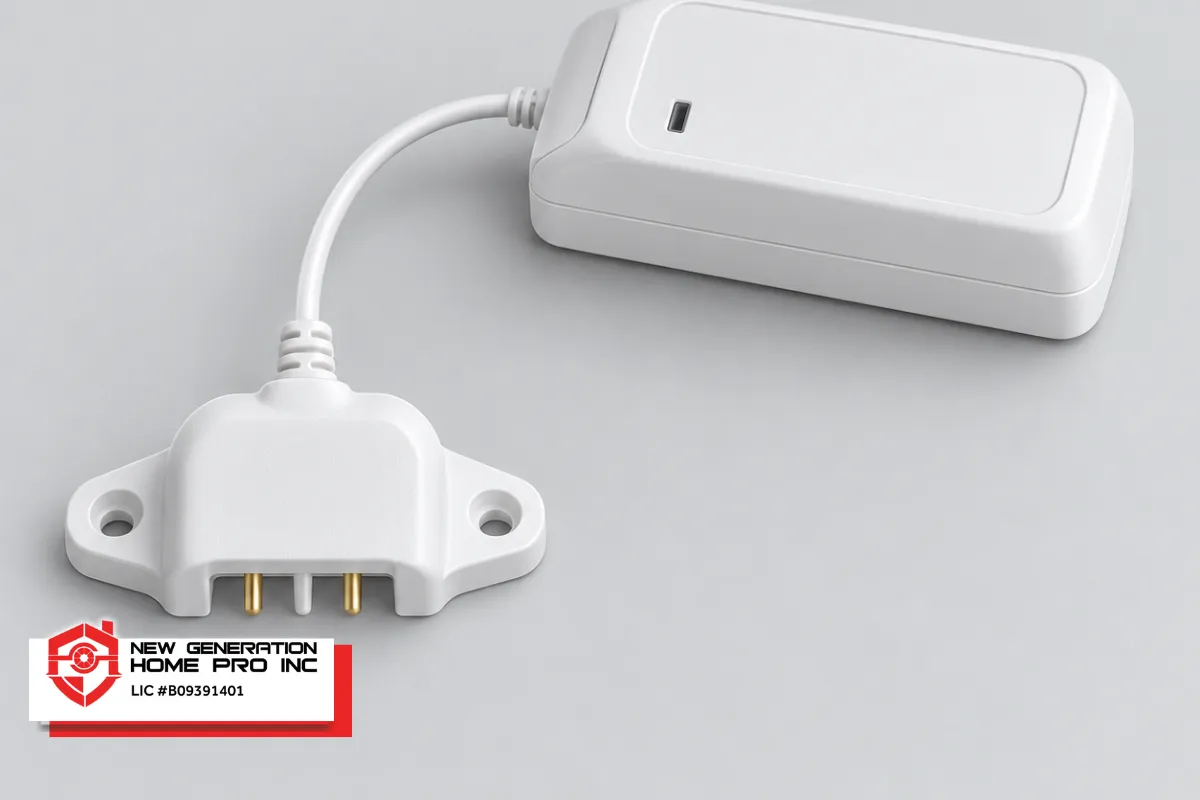
Flood sensors are part of a broader home security strategy that protects not only from intrusion but also from environmental threats inside the house. Here is why they are worth the upgrade.
Financial protection. Early leak alerts can prevent or reduce repair costs that would otherwise reach thousands of dollars. Homeowners need flood insurance as standard homeowners policies do not cover flood damage, but catching a leak in its first minutes limits the scope of any claim. Smart home security can reduce insurance premiums by up to 20%, and commercial security systems can help lower insurance premiums as well, making the investment easier to justify for both residential and business properties.
Peace of mind. Smart home security systems offer 24/7 monitoring, so you know that a leak detected at 2 a.m. or while you are on vacation will not go unnoticed. Flood sensors are effective for detecting slow, hidden leaks that would otherwise cause mold growth or structural rot over weeks.
Visual confirmation. Smart cameras provide live video feeds to your smartphone, allowing you to check the area near a triggered sensor before calling a plumber. Conroe offers both residential and commercial security camera installations, so options exist for every property type.
Lifestyle convenience. Pairing flood sensors with automation rules reduces manual checks and keeps a busy family safe from avoidable water disasters. Instead of walking through the house to inspect every appliance each day, a quick glance at your app confirms all zones are dry.
Professional Installation, Maintenance, and Local Code Considerations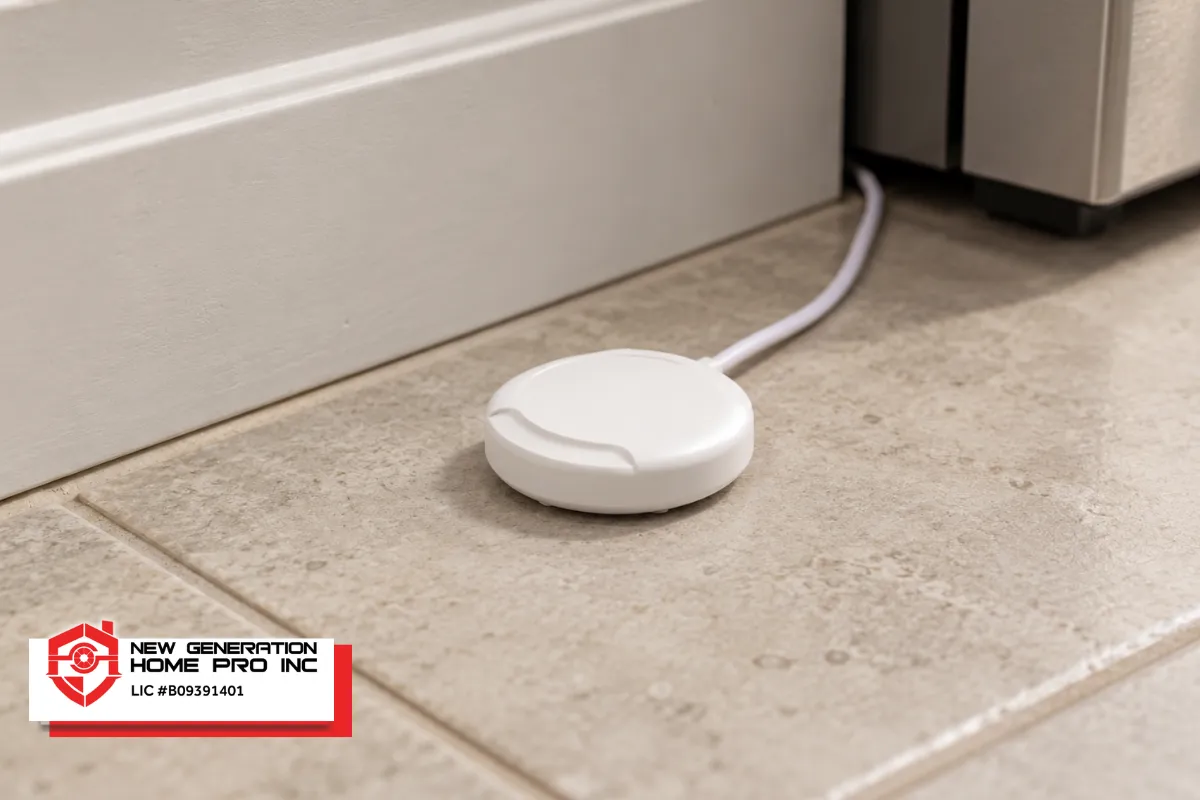
Professional installation in Conroe, Texas brings several advantages: correct device selection, reliable wireless range testing, and neat sensor placement that avoids accidental damage or tripping hazards. Many security systems offer same-day installation services, so protection does not have to wait.
A typical installation follows these steps:
- A technician assesses water-risk areas throughout the home.
- Each sensor is placed or mounted per manufacturer instructions.
- Sensors are enrolled into the alarm panel and assigned labeled zones.
- The installer runs a leak-simulation test on every device.
- The homeowner receives training on app alerts, status checks, and response steps.
Equipment should be listed and installed according to manufacturer guidelines and applicable Texas safety requirements. Security systems can include remote arming and disarming features, giving you control over the entire setup from one interface.
For maintenance, schedule periodic battery checks, review sensor status in your app, and keep the area around each probe clean so detection is not blocked by dust or debris. An annual system test with your security provider confirms that every sensor, camera, and contact still communicates properly. Ask your provider about warranties, monitoring plan options, and how environmental sensors like water, smoke, and CO detectors are handled in emergency dispatch protocols.
Home Security System in Conroe, TX – New Generation Home Pro Inc
At New Generation Home Pro Inc, we design and install custom home security solutions built around the needs of Conroe homeowners. Our team handles everything from door and window sensors to motion detectors, indoor and outdoor cameras, smart locks, and water leak sensors for complete property protection. We understand the local climate, the construction styles common in this area, and the specific risks that come with living in Texas. Whether you need a full security camera system for a new house or want to add flood sensors to an existing alarm setup, we provide professional installation, hands-on training, and ongoing support so your family stays safe and informed. We also service the prominent surrounding areas. Call us today at (936) 205-2735 or fill out our online contact form to schedule a consultation. Let our team at New Generation Home Pro Inc recommend the right options to fit your home and budget.
Frequently Asked Questions
How Long Do Most Flood Sensors Last Before Needing Replacement?
Most flood sensors have a service life of five to ten years, depending on build quality and the environment where they are installed. Batteries typically need replacement sooner, often every two to three years for standard lithium cells. Your security app or panel will display low-battery warnings, so you do not have to guess. Sensors placed in humid locations like laundry rooms or near HVAC condensate pans may need more frequent inspection because moisture and dust can corrode the probes over time. Label each sensor with its install date or track it in a simple spreadsheet so you can plan upgrades as newer, longer-lasting models become available on the market.
Is One Flood Sensor Enough for a Small House?
Even in a compact home, water can originate from multiple sources: the water heater, the washing machine, a toilet supply line, or a kitchen sink connection. One sensor placed near the highest-risk appliance is better than none, but most professionals recommend at least three well-placed devices to cover the primary zones. If budget is limited, start with the water heater and washer, then add coverage over time. A professional walk through your place can reveal hidden risk zones you might not notice on your own, such as an older supply line tucked inside a utility closet or a rarely checked area behind a porch-adjacent wall.
Will a Flood Sensor Work During an Internet or Power Outage?
Many security panels installed in Conroe homes include backup batteries that keep locally connected sensors operational during short-term power outages. The panel can still sound a local siren when water is detected, even without utility power. If the internet or cellular connection drops, remote push notifications to your phone may be delayed until connectivity returns. Ask your installer about cellular backup options and panel battery capacity. Some panels run for 24 hours or more on backup power alone. Test your system periodically by simulating outages to confirm the alarm and sensors behave as expected in different scenarios, and keep spare batteries on hand.
Do Flood Sensors Cause a Lot of False Alarms?
Quality flood sensors rarely produce false alarms when installed correctly on a flat, level surface where water would actually pool. Occasional drips, condensation, or accidental splashes can trigger alerts if a sensor sits directly under a frequently used faucet or in a mop area. Position sensors just outside splash zones and use drip pans under appliances where appropriate to separate normal moisture from a real leak. If nuisance alerts occur, review the alert history in your app and work with your security provider to fine-tune placement. Moving a sensor a few inches can make the difference between a reliable detector and a device that cries wolf on visitors doing dishes.
How Much Do Flood Sensors and Monitoring Typically Cost?
Individual flood sensors generally range from about twenty dollars for a basic model to around one hundred dollars for versions with advanced connectivity or freeze detection. Many security companies offer package deals when sensors are bundled with a broader system that includes cameras, door contacts, and automation. Ongoing monitoring may be included as part of your overall security plan rather than billed per sensor. The real value is in what you avoid: a single undetected leak can lead to repair costs that dwarf the price of a sensor many times over. Contact a local provider to get a personalized quote based on your home size, the number of sensors needed, and whether additional smart devices or cameras are part of the plan.
Disclaimer
Disclaimer: This article provides general information about flood sensors and home security in Conroe, Texas and is not legal, insurance, or code-compliance advice; always consult qualified local professionals before making decisions.
Read Can You Get an Alarm System with Pet-Friendly Sensors in Conroe, TX?